

A Seasonal Asphalt Care Calendar: What to Do (and When) in the Midwest

By Pate Asphalt – Leaders in Asphalt & Blacktop Solutions for Over 40 Years
In the Midwest, asphalt doesn’t get a break.
From freezing winters and spring downpours to scorching summer heat and leaf-clogged fall drains, your pavement endures constant seasonal stress.
Whether you manage a commercial property, oversee a homeowners’ association, or own a business with heavy traffic, understanding when and how to care for your asphalt can mean the difference between minor maintenance and major reconstruction.
At Pate Asphalt, we’ve spent more than four decades helping Midwest property owners protect their pavement investments. With the right seasonal strategy, asphalt surfaces can last 15–20 years or more. Without one, that lifespan can be cut nearly in half.
This comprehensive seasonal asphalt care calendar will guide you through what to do and when to keep your pavement strong, safe, and looking professional year-round.
Why Seasonal Asphalt Maintenance Matters in the Midwest
Midwestern climates are particularly tough on pavement because of freeze-thaw cycles. When water seeps into small cracks and freezes, it expands. This expansion widens cracks and weakens the base. As temperatures fluctuate, the cycle repeats accelerating deterioration.
Industry data shows that proactive sealcoating and crack filling can extend pavement life by up to 30–50%. That’s a substantial return on a relatively modest maintenance investment.
The key is timing. Asphalt maintenance isn’t one-size-fits-all. It’s seasonal.
Winter (December – February): Protection & Monitoring
Primary Threats:
Freeze-thaw cycles
Snowplow damage
Deicing chemicals
Water infiltration
Winter is survival mode for asphalt. Once temperatures drop below freezing, major repairs and installations typically pause. However, maintenance awareness becomes critical.
What to Do in Winter
1. Monitor for New Damage Inspect high-traffic areas after major storms. Plows can chip edges, scrape raised areas, and worsen existing cracks.
2. Remove Snow Carefully Use proper plowing techniques. Avoid metal blades digging into pavement, especially on uneven surfaces.
3. Watch Drainage Areas Blocked drains cause standing water, which turns into ice and increases cracking.
4. Plan Ahead Winter is the ideal time to schedule spring inspections and maintenance work. Contractors book quickly once temperatures rise.
What NOT to Do:
Avoid sealcoating or asphalt installation in freezing temperatures.
Do not ignore small cracks that appear. Document them for spring repair.
At Pate Asphalt, we help property managers create maintenance action plans during the winter months so they’re ready the moment weather permits.
Spring (March – May): Inspection & Repair Season
Primary Threats:
Thaw-related cracking
Potholes
Base weakening
Drainage failures
Spring reveals the true impact of winter damage. This is the most important assessment period of the year.
What to Do in Spring
1. Conduct a Professional Pavement Inspection
Look for:
New cracks
Expanding alligator cracking
Potholes
Standing water
Edge breakdown
A professional evaluation determines whether you need crack sealing, patching, milling and overlay, or more extensive repairs.
2. Crack Filling Spring is prime time for crack sealing. Filling cracks prevents water from penetrating deeper into the base before heavy spring rains.
3. Pothole Repairs Address potholes immediately. They worsen quickly and pose liability risks.
4. Evaluate Drainage Systems Ensure basins and grading are directing water away from pavement.
A Real Midwest Experience
One of our long-term commercial clients a distribution facility in Illinois contacted us last spring after noticing several potholes near loading docks.
After inspection, we discovered underlying water damage from clogged drainage. We performed targeted patching and corrected slope issues.
The property manager later shared:"Pate Asphalt didn’t just patch the holes they identified the real problem. Since the repair, we’ve had zero recurring issues. It saved us from a much larger replacement project."
That’s the difference experience makes.
Summer (June – August): Sealcoating & Major Projects
Primary Threats:
UV oxidation
Surface drying
Softening in extreme heat
Heavy traffic stress
Summer is prime asphalt maintenance season in the Midwest. Warm temperatures allow for optimal curing and installation.
What to Do in Summer
1. Sealcoating Sealcoating protects asphalt from UV rays, water penetration, oil spills, and oxidation. Ideally applied every 2–3 years, it restores the deep black finish and creates a protective barrier.
Sealcoating during proper temperatures ensures even curing and long-lasting results.
2. Line Striping & Pavement Markings After sealcoating or resurfacing, repaint striping for ADA compliance and traffic safety.
3. Asphalt Milling & Overlay If your pavement has widespread surface damage but a stable base, summer is ideal for milling and overlay projects.
4. Full Depth Replacement (If Necessary) Extensive structural failure may require reconstruction. Summer provides the best conditions for excavation, base stabilization, and installation.
Why Summer Timing Matters
Asphalt requires consistent warm temperatures for proper compaction and curing. Installing pavement outside recommended temperature ranges can compromise durability.
After 40+ years in the industry, we know Midwest weather patterns and we schedule projects strategically to maximize performance and longevity.
Fall (September – November):
Preventative Prep Before Winter
Primary Threats:
Temperature fluctuations
Leaf-clogged drains
Pre-freeze water intrusion
Fall is the final opportunity to prepare asphalt before winter stress begins.
What to Do in Fall
1. Final Crack Sealing Seal any new cracks before freezing temperatures arrive.
2. Clean Surfaces & Remove Debris Leaves trap moisture and clog drains. Moisture retention accelerates deterioration.
3. Inspect Edges & Curbs Edges are vulnerable during plowing season. Reinforce weak areas.
4. Evaluate Sealcoat Timing Early fall can still be suitable for sealcoating, depending on temperatures.
5. Schedule Winter Planning Meeting Set a spring inspection appointment and discuss long-term maintenance budgeting.
Proactive fall maintenance dramatically reduces spring repair costs.
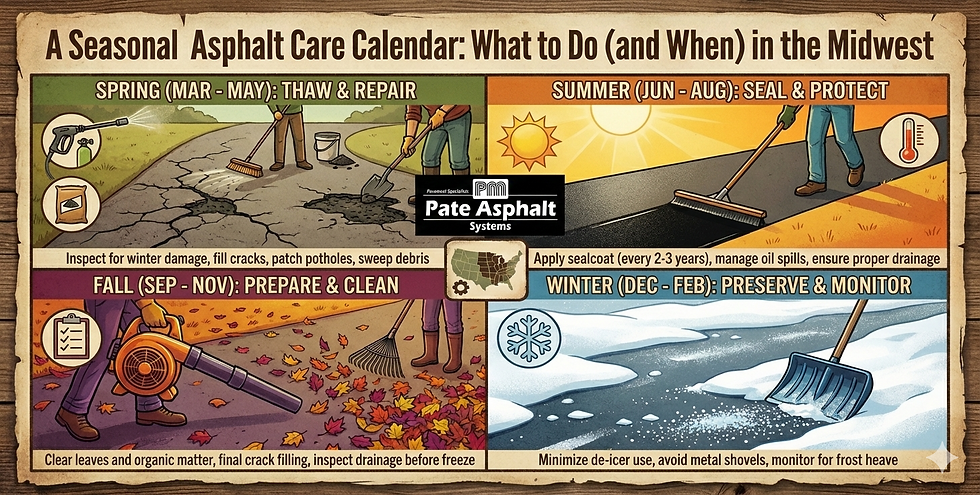
A Year-Round Maintenance Timeline Snapshot
Winter: Monitor, document damage, plan spring repairs.
Spring: Inspect, crack seal, patch potholes, correct drainage.
Summer: Sealcoat, stripe, resurface, complete major repairs.
Fall: Final crack sealing, cleaning, winter preparation.
When followed consistently, this seasonal approach prevents minor issues from becoming structural failures.
Common Midwest Asphalt Mistakes
Even experienced property managers sometimes overlook critical steps.
Mistake #1: Waiting Until Damage Is Severe
Small cracks cost far less to repair than widespread base failure.
Mistake #2: Skipping Sealcoating
UV exposure oxidizes asphalt, turning it brittle and gray. Once oxidation penetrates deeply, resurfacing may be required.
Mistake #3: Ignoring Drainage
Water is asphalt’s biggest enemy. Poor grading and clogged drains accelerate pavement breakdown.
Mistake #4: Hiring Inexperienced Contractors
Improper compaction, poor mix design, or rushed curing leads to premature failure.
At Pate Asphalt, our four decades of Midwest expertise ensure each project is engineered for durability not just appearance.
The Cost of Neglect vs. Proactive Care
Let’s put it into perspective.
A well-maintained asphalt parking lot might require routine crack filling and sealcoating every few years. In contrast, neglected pavement often requires milling and overlay within 8–10 years or full replacement even sooner.
Proactive maintenance is not an expense. It’s an investment protection strategy.
Our clients who follow structured seasonal maintenance plans consistently spend less over the lifespan of their pavement.
Why Midwest Property Owners Trust Pate Asphalt
Experience matters especially in climates as demanding as ours.
For over 40 years, Pate Asphalt has been a trusted leader in asphalt and blacktop solutions across the Midwest.
Our expertise includes:
Commercial paving
Asphalt resurfacing
Milling and overlay
Sealcoating
Crack sealing
Line striping
Full-depth replacement
Preventative maintenance planning
We don’t believe in temporary fixes. We believe in long-term pavement performance.
Our team evaluates each property individually, considering traffic load, soil conditions, drainage, and seasonal climate patterns.
That’s how we deliver results that stand up to Midwest weather year after year.
Final Thoughts: A Smart Calendar Protects Your Investment
Your asphalt pavement is one of the first things customers, tenants, and visitors notice. It affects safety, property value, and brand perception.
In the Midwest, asphalt maintenance isn’t optional it’s strategic.
Following a seasonal care calendar ensures:
Fewer emergency repairs
Lower long-term costs
Improved curb appeal
Enhanced safety
Extended pavement lifespan
At Pate Asphalt, we’ve helped thousands of Midwest property owners build smarter maintenance plans that protect their investments for decades.
If you’d like a professional evaluation or want to build a customized seasonal maintenance strategy, our team is ready to help.
For free quotes please reach out to us at https://www.pateasphalt.com/contact.
With over 40 years of leadership in asphalt and blacktop solutions, Pate Asphalt is your trusted Midwest partner season after season.


Comments