

Top Signs Your Asphalt Driveway Needs Repair or Resurfacing
- Inspired Connection Agency
- Dec 19, 2025
- 6 min read

Homeowners across Cedar Rapids and Eastern Iowa rely on asphalt driveways for their durability, affordability, and clean, modern appearance. While asphalt is one of the most resilient driveway materials available, it does not last forever. Over time, weather, traffic, and seasonal conditions begin to wear down the surface. Knowing when your driveway needs repairs or a full resurfacing can help you avoid more costly damage and extend the lifespan of your pavement.
Whether your driveway serves as the entrance to your home, a path to your garage, or the first impression visitors see, keeping it in top condition matters. Understanding the early signs of deterioration ensures you act before minor issues escalate into bigger, more expensive problems.
Pate Asphalt has more than 40 years of experience serving Cedar Rapids, Iowa City, Waterloo, Dubuque, and surrounding Eastern Iowa communities. With thousands of driveways completed, resurfaced, and repaired, our team has firsthand knowledge of what causes asphalt wear and how to restore it effectively.
This guide outlines the top signs your asphalt driveway needs repair or resurfacing, how to identify each issue, and what type of maintenance solution is best for your Iowa home.
Why Asphalt Driveways Deteriorate in Iowa
Iowa’s climate plays a major role in the lifespan and condition of asphalt driveways. Cedar Rapids homeowners face a unique combination of environmental factors:
Freeze-Thaw Cycles
Moisture seeps into small cracks. When temperatures drop, the water freezes and expands. The repeated cycles widen cracks and weaken the asphalt structure.
Snow, Ice, and Deicing Salt
Salt does not chemically damage asphalt like it does concrete, but it does accelerate moisture penetration and surface wear.
Heavy Vehicle Traffic
SUVs, trucks, and delivery vehicles can place additional weight and pressure on the pavement, especially in areas with poor base support.
Aging and Oxidation
UV rays, oxygen exposure, and natural aging cause asphalt to fade, dry out, and lose flexibility.
Understanding why asphalt deteriorates helps homeowners identify the signs early and act before the damage becomes severe.
Top Signs Your Asphalt Driveway Needs Repair or Resurfacing
Below are the most common indicators that it is time to schedule asphalt maintenance. Some signs require minor repairs, while others suggest that resurfacing may be the best long-term solution.
1. Small Cracks Starting to Form
Hairline or surface cracks are one of the earliest signs of asphalt deterioration. These cracks often indicate the beginning of oxidation or stress caused by temperature changes.
Cracks under a quarter-inch wide can typically be repaired with crack filling. However, if left untreated, small cracks expand and allow water to penetrate the base layers, leading to larger problems later.
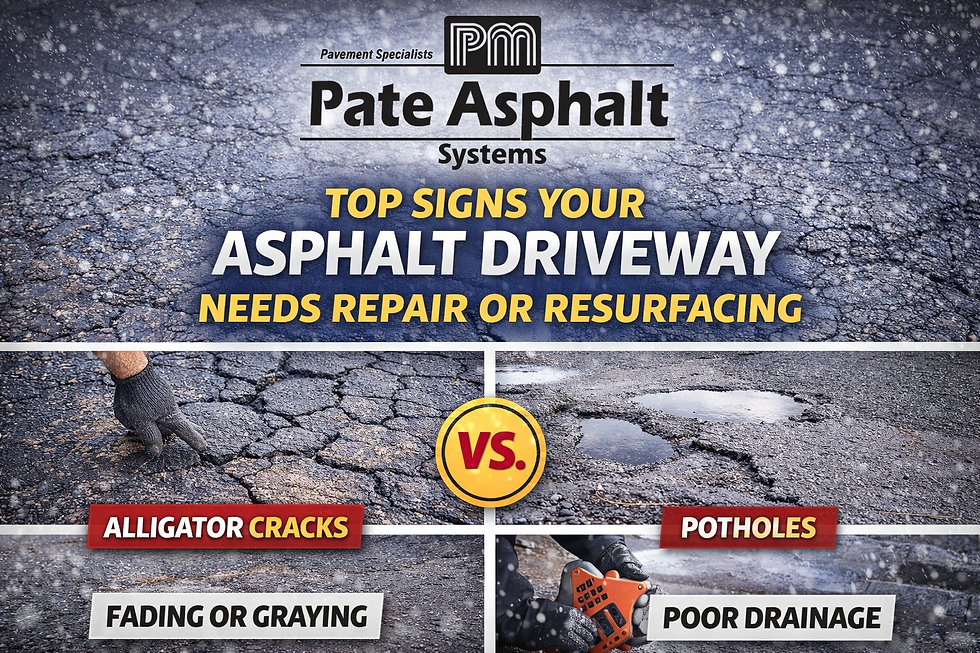
2. Alligator Cracking or Spider Web Cracks
Alligator cracking resembles a pattern of interconnected cracks similar to the skin of an alligator. This type of damage usually signals structural issues below the surface, such as:
Weak foundation support
Water infiltration
Aging pavement
Heavy vehicle loads
Alligator cracking cannot be patched effectively. Resurfacing—or in severe cases, full-depth replacement—is necessary.
3. Warping, Buckling, or Uneven Areas
If parts of your driveway appear sunken, raised, or wavy, this is usually a sign that the base beneath the asphalt has shifted, settled, or weakened. Iowa’s frequent precipitation and freeze-thaw cycles can cause soil movement, leading to uneven pavement.
Minor warping can sometimes be repaired, but resurfacing is often the best solution when the structural base is compromised.
4. Standing Water or Poor Drainage
Water pooling on your driveway is a major warning sign. Properly installed asphalt is designed to encourage runoff. Standing water can indicate:
Depressions
Compaction failure
Drainage issues
Subsurface weakening
Even small puddles accelerate deterioration by encouraging water penetration. Depending on severity, either repairs or resurfacing may be needed.
5. Fading, Drying, or Gray Discoloration
Over time, UV rays break down the binding agents in asphalt, causing it to turn light gray. This fading is a sign of oxidation and aging. While it does not always mean structural failure, it does indicate your driveway is losing flexibility and may begin cracking soon.
In most cases, sealcoating is the best preventive measure, but if fading is combined with cracking or surface erosion, resurfacing may be required.
6. Surface Erosion or Loose Gravel
If you notice loose stones, small pits, or crumbling at the edges, your driveway’s surface layer may be deteriorating. This usually occurs due to oxidation, snow removal equipment, or normal aging.
Surface erosion reduces traction and weakens the asphalt, making it more vulnerable to cracks and potholes.
7. Potholes Forming in the Surface
Potholes are one of the most obvious indicators that your driveway needs repair. They form when water infiltrates the base layers, causing the pavement to weaken and break apart. Potholes worsen quickly and can create safety hazards for vehicles and pedestrians.
While individual potholes can be patched, multiple potholes often indicate widespread deterioration and the need for resurfacing.
8. Edges Breaking Away or Crumbling
Driveway edges are naturally more vulnerable because they receive less support than the center portion. If the edges begin to crumble or crack, it may be a sign that the driveway is aging or the base needs reinforcement.
Addressing crumbling edges early helps prevent the damage from spreading inward.
9. Frequent Need for Repairs
If you find yourself fixing cracks, patching holes, or sealing the driveway more frequently than usual, the pavement may be nearing the end of its functional lifespan.
Resurfacing becomes more cost-effective than continuous patchwork once the majority of the driveway shows signs of aging or failure.
10. Your Driveway is 15–20+ Years Old
The typical lifespan of a well-maintained asphalt driveway is about 20 years in Iowa. After that point, even if visible signs of damage are minimal, resurfacing is often recommended to restore strength and flexibility.
Aging asphalt naturally becomes brittle, more prone to cracking, and less able to withstand Iowa’s extreme winters.
Repair vs. Resurfacing: Which Does Your Driveway Need?
Determining whether you need simple repairs or a full resurfacing depends on the extent of the damage. Here’s how homeowners can decide:
Choose Repair If:
Cracks are small and contained
Damage is limited to isolated spots
The base layer is still solid
Potholes are minimal
Choose Resurfacing If:
Cracks cover more than 30 percent of the driveway
Alligator cracking is present
Multiple potholes are forming
The driveway surface is significantly aged
Drainage issues or warping are widespread
Resurfacing provides a fresh, smooth layer of asphalt over the existing base, restoring your driveway’s structure and extending its lifespan for many years.
A Real Testimony from a Cedar Rapids Homeowner
"Our driveway had been patched several times over the years, but the cracks and potholes kept coming back. We finally called Pate Asphalt for an evaluation, and they recommended resurfacing instead of more repairs. The difference has been remarkable. The driveway looks brand new, drains properly, and has held up perfectly through two winters. Pate Asphalt’s experience made all the difference."
— Linda S., Cedar Rapids, Iowa
A Helpful Statistic for Homeowners
Industry research shows that driveways with early crack repairs and routine maintenance can last up to 40 percent longer than those without preventive care. Early intervention is one of the most effective ways to extend the lifespan of your asphalt pavement in Eastern Iowa’s climate.
Preventive Maintenance to Protect Your Asphalt Driveway
To help your driveway last as long as possible, homeowners in Cedar Rapids should follow these best practices:
1. Sealcoat Every 2–3 Years
Sealcoating protects against water, salt, UV rays, and oxidation.
2. Fix Cracks as Soon as They Appear
Even small cracks can grow into major issues.
3. Avoid Chemical Spills
Gas, oil, and chemicals can soften asphalt.
4. Clear Snow Carefully
Use a plastic shovel or adjust the snowblower blades to avoid scraping.
5. Maintain Proper Drainage
Ensure gutters and grading direct water away from the driveway.
Routine maintenance adds years of life to your pavement and reduces long-term costs.
Why Cedar Rapids Homeowners Trust Pate Asphalt
Pate Asphalt is one of the most trusted asphalt contractors in Eastern Iowa because of our:
Expert diagnosis of pavement issues
Affordable driveway resurfacing solutions
High-quality materials and workmanship
Decades of experience with Iowa weather conditions
Family-owned values and customer-focused service
When it comes to identifying whether your driveway needs repair or resurfacing, our team provides honest recommendations based on what gives you the best long-term value.
Ready to Restore Your Driveway?
If your asphalt driveway is showing any of the signs mentioned above, repair or resurfacing may be necessary to protect your investment. Pate Asphalt has served Eastern Iowa homeowners for more than 40 years with reliable, long-lasting asphalt solutions built for Iowa’s challenging climate.
Whether you need expert crack repair, pothole patching, sealcoating, or full driveway resurfacing, our team is ready to help your home look its best and stay safe for years to come.


Comments